 AIPrOoHub
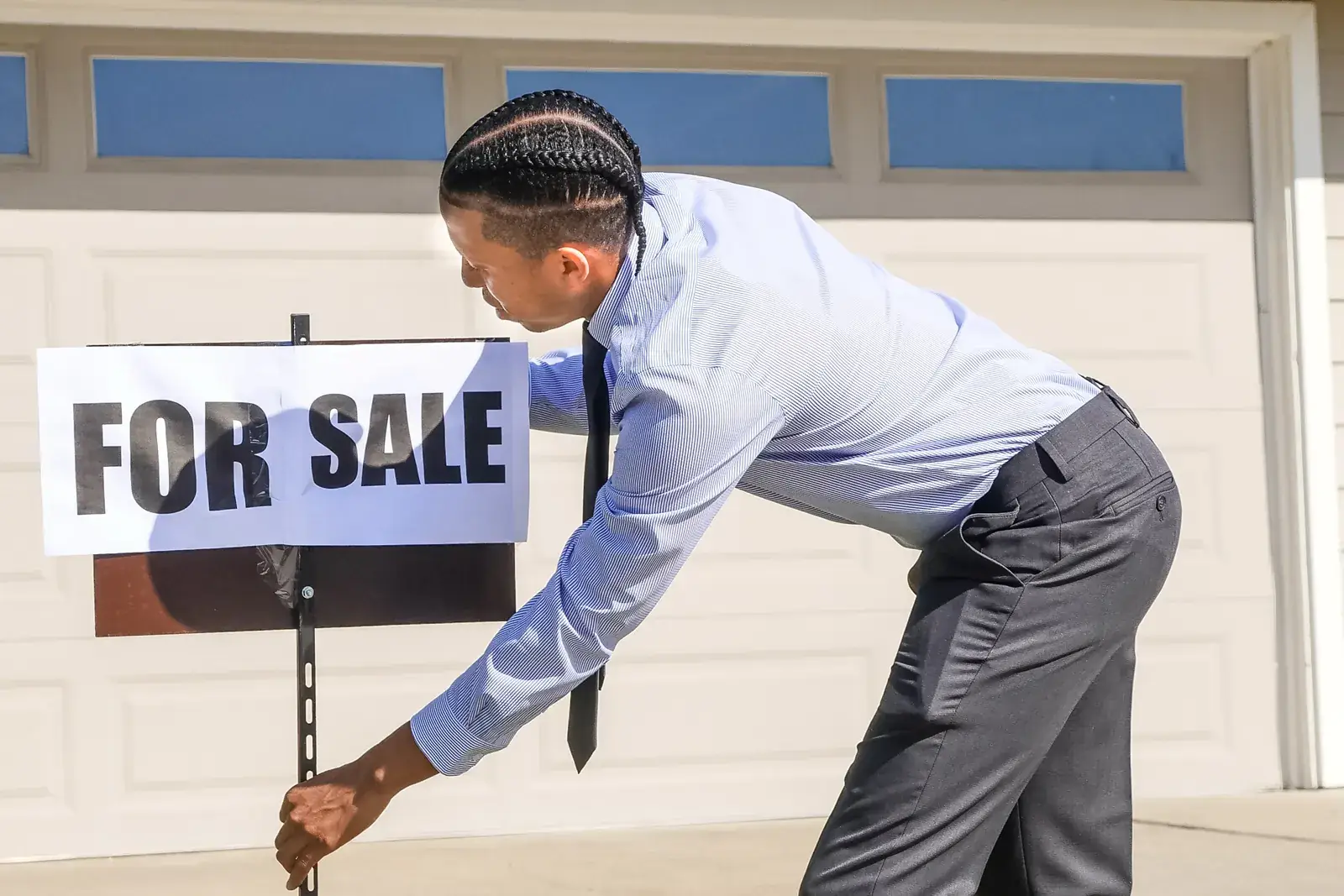
Open house flyer copy is not a listing description shrunk onto paper. It is a five second pitch to a driver. Here is how to write it with AI.
A driver passes your open house sign at 35 miles per hour. They have about five seconds to read the flyer, decide the home is worth a stop, and find a place to pull over. Most flyers waste those five seconds on the wrong information: the agent's headshot, a wall of features, and a paragraph of copy nobody can read from a car. Good open house flyer copy has one job, and that job is to stop the driver. Everything else is secondary.
The good news is that a flyer is small, which makes it a perfect job for AI. You need a clear headline, three facts, and one call to action, all written for a person who is moving. This article shows you how: headlines that stop drivers, the five second scan test, and the neighborhood invite copy that turns nearby residents into visitors.
This article builds on the AI prompts for real estate agents, and it pairs with the Open house marketing AI playbook and the AI live stream open house scripts. Check the finished draft with the Listing Copy Grader.
The Five Second Scan Test Every Flyer Must Pass
Before you print a single flyer, run the five second scan test. Hold the flyer at arm's length, look at it for five seconds, then look away and ask yourself three questions. What is the headline? What are the three facts? What should I do next? If you cannot answer all three, the flyer fails. Most flyers fail because they try to say everything: price, beds, baths, square footage, and a paragraph about the neighborhood. A driver cannot read all of that, so they read none of it. The scan test forces you to choose. One headline, three facts, one action.
The five second scan test prompt
"Review this open house flyer copy and run a five second scan test: [paste the copy]. Tell me the headline, the three facts, and the call to action a driver would remember after five seconds. Then cut everything else and rewrite the flyer in under 40 words."
Why it works: it forces the flyer down to what a moving driver can actually absorb.
Headlines That Stop Drivers
The headline is the whole flyer. If the headline fails, nothing else matters, because the driver never reads the second line. A good open house headline does one of three things: it names a price that surprises, it names a feature the neighborhood wants, or it asks a question the driver is already thinking. "New on the market" does none of those things, and neither does "Open house today." Try specifics instead: "3 beds, big yard, under 400K" tells a driver exactly why to stop. Ask AI for ten headline options, using the headline psychologies, then pick the one that would make you slow down if you were driving past.
The headline generator prompt
"Write 10 open house flyer headlines for a [number] bed, [number] bath home at [address or neighborhood], priced at [price], open [day and time]. Each headline must be under 8 words. Make 3 about price, 3 about one standout feature, and 4 that speak directly to neighbors. No exclamation marks."
Why it works: it gives you a spread of specific headlines to choose from instead of one generic line.
What Goes on the Flyer and What Stays Off
A flyer is not a listing sheet. It is a sign that happens to be printed on paper, and it should carry only what a person can read at a glance. On the flyer: the headline, the address, the date and time, three facts (beds, baths, and one standout feature or the price), and the call to action. Off the flyer: the full feature list, the room dimensions, and the agent bio. Those details belong on the listing page and on the take home sheet inside the house, where a visitor has time to read them.
The flyer trim prompt
"Trim this open house flyer copy to what belongs on a one page flyer: [paste the copy]. Keep the headline, address, date and time, three facts, and one call to action. Move everything else into a separate list labeled 'save for the take home sheet.' The flyer must be under 60 words total."
Why it works: it separates the flyer from the handout, so each one does its own job well.
Riders, Yard Signs, and Directional Signs
The yard sign and the flyer are a team, and the rider is the link between them. The sign carries the agent name and phone number. The rider, the small panel hung below or above the sign, carries the one message that makes a driver turn in: the price, the open house time, or the standout feature. A rider has room for about five words, so choose the strongest one. "Open Sat 11 to 2" works. "Pool, 3 beds, 400K" works. Directional signs are even simpler: an arrow, the words "Open House," and the street name.
The rider copy prompt
"Write 5 rider copy options for a yard sign at an open house: the home is a [number] bed, [number] bath at [price] in [neighborhood], open [day and time]. Each option must be 5 words or fewer. Rank them by which one would most likely make a driver turn into the street."
Why it works: it forces every option down to the five words a driver can read at speed.
QR Codes and the Call to Action
Every flyer needs a call to action, and for an open house the action is simple: come inside, or scan to see more. A QR code is the bridge between the paper flyer and the listing page, but only if the buyer knows why to scan it. A bare QR code with no label gets ignored, because nobody scans a mystery. Label it with the benefit: "Scan for photos and the full tour," or "Scan to see the kitchen before you drive over." Place the code bottom right of the flyer, large enough to scan from a car window, and never smaller than one inch square. Test it yourself, with your own phone, from three feet away, before you print a hundred copies.
The QR code call to action prompt
"Write 5 QR code labels for an open house flyer for a [number] bed home in [neighborhood]: each label must be under 8 words and tell the scanner what they get, like photos or a virtual tour. Then write one short call to action line for the bottom of the flyer."
Why it works: it turns a bare code into a clear benefit, so people actually scan it.
Door Hangers and Neighborhood Invite Copy
Neighbors are the best open house visitors, and they are also the most overlooked. A neighbor who walks through your open house learns the market value of their own street, and a neighbor who likes what they see becomes a future listing. The door hanger is how you reach them, and it needs a different voice from the flyer. The flyer sells a home. The door hanger invites a neighbor. Write it like a note, not an ad: "You are invited to see the home at [address] this Saturday from 11 to 2. Come say hello, see what homes on our street are selling for, and enjoy a coffee on us." Mention the street by name, mention the time clearly, and sign it with your first name.
The neighborhood invite prompt
"Write a door hanger invitation for neighbors near an open house at [address] on [day and time]: invite them to stop by, learn what homes on their street are worth, and enjoy [refreshment]. Keep it under 60 words, warm and personal, signed with my first name only, [name]."
Why it works: it sounds like a neighbor inviting a neighbor, which is exactly what it is.
Design Notes That Make Copy Work Harder
Good copy on a bad layout still fails, so a few design rules matter. Use one large photo, not four small ones: a single image of the front of the home, or the best room, at a size the driver can see from the car. Put the headline in the largest type on the page, at least twice the size of the body text. Leave white space around the headline, because white space is what makes the eye stop. Use dark text on a light background, since light text on a dark photo is hard to read at a glance.
A Flyer Template You Can Reuse This Weekend
Build one flyer template and reuse it for every open house, changing only the details. Top: one large photo of the home. Below it: the headline, in the largest type on the page. Under the headline: three facts on one line, like "3 beds, 2 baths, 400K." Under the facts: the address, the date, and the time, in bold. Bottom right: the QR code with its benefit label. Bottom left: your first name and phone number, in type large enough to read from a car. That is the whole flyer.
Frequently Asked Questions
How many words should an open house flyer have?
Aim for 40 to 60 words on the flyer itself, not counting the address and your contact details. That is enough for a headline, three facts, and a call to action, and short enough that a driver can read it in five seconds.
Should I put the price on the flyer?
Yes, if the price helps the home stand out. A price that is lower than the neighborhood expects will stop drivers. If the price is the main reason to visit, lead with it.
What size should the flyer be?
A standard letter size sheet works for the take home flyer inside the house. For the flyer on the sign or the door, use a half sheet or a door hanger, which is easier to grab and easier to read at a glance.
Do QR codes actually work on open house flyers?
Yes, when they are labeled with a benefit and large enough to scan. "Scan for photos and the full tour" gives the buyer a reason. A bare code with no label gets ignored.
How many flyers should I print for one open house?
Print 50 to 100 for a typical open house, depending on the traffic on the street. Put 20 on the sign and the door hangers on the nearest 30 homes, and keep the rest inside for visitors.
What is the difference between a flyer and a rider?
The flyer is the printed sheet with the headline, facts, and call to action. The rider is the small panel on the yard sign with about five words, like the price or the open house time. The rider gets the driver to turn in. The flyer tells them why to stay.
The Shortcut
Open house flyer copy is a small job with a big payoff: one headline, three facts, and one call to action, written for a driver with five seconds to spare. Use AI to generate the headlines with the prompts in the AI Prompt Pack for Real Estate Agents, trim the copy to what fits on the page, and write the rider in five words or fewer. Then invite the neighbors personally and label the QR code with a benefit.
Get the AI Prompt Pack, $39, instant download →
Related reading: AI Prompts for Real Estate Agents · Open House Marketing AI Playbook · AI Live Stream Open House Scripts
Get the AI Prompt Pack, $39, one time (opens in new tab). 209 prompts that write listings, ads and follow-ups like these, ready to paste.