 AIPrOoHub
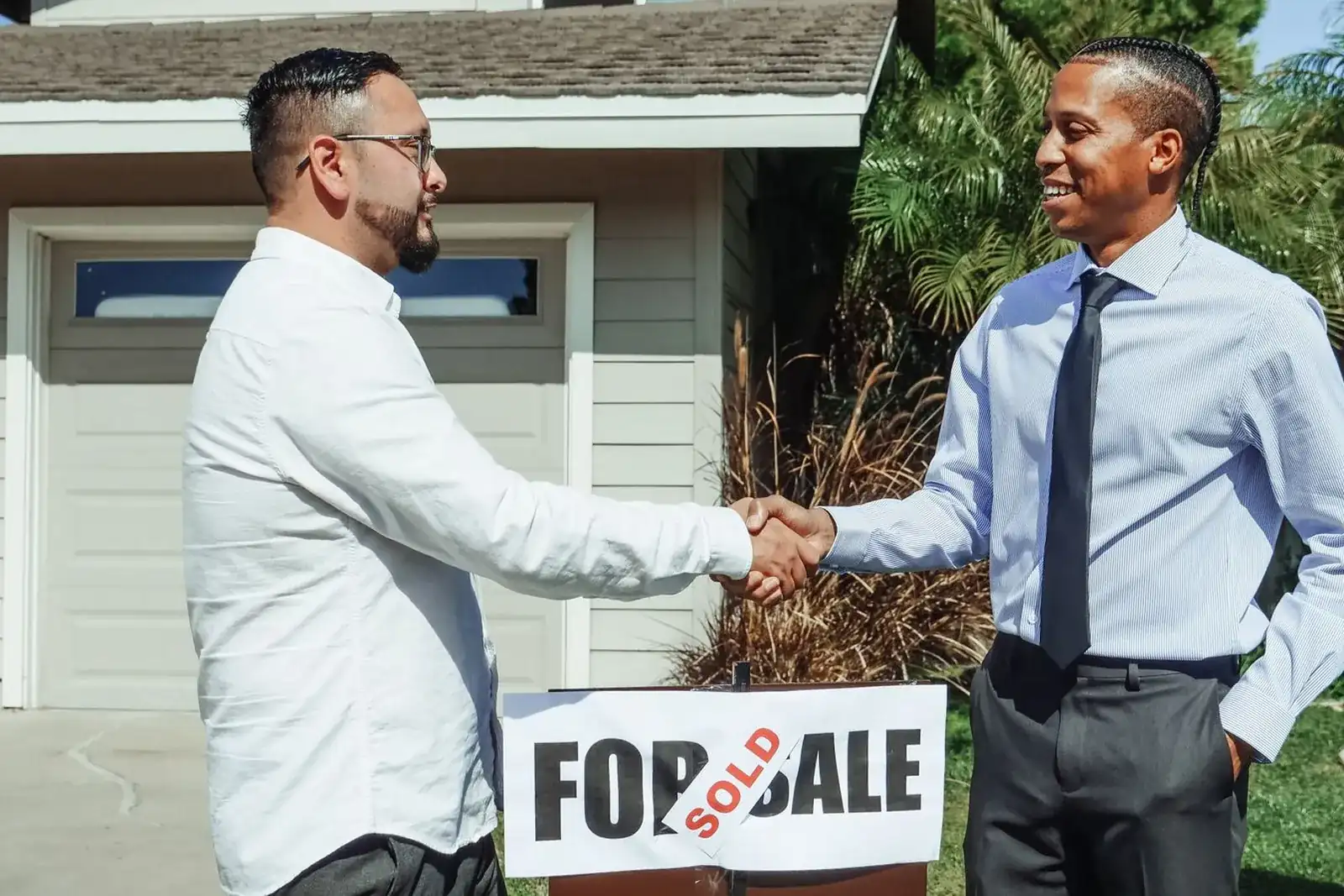
Every listing is two marketing campaigns. Here is how AI writes both, and turns one sold sign into the next listing.
A just listed, just sold sequence is the oldest listing generator in real estate, and it works because neighbors pay attention when a house near theirs sells. The problem is execution: a full campaign means postcard copy, social posts, emails, door hangers, call scripts, and a personal letter, repeated at just-listed, open house, pending, and just-sold. AI closes the gap: feed it the listing details once, and it drafts every piece in one sitting, in your voice, for every channel. The just-sold proof copy works best with real client words: Social Proof: Turn Testimonials Into Ads With AI (2026) shows how to turn them into ads.
This article gives you the playbook: the launch sequence, just-listed copy for every channel, just-sold proof copy, circle prospecting scripts, homeowner letters, a radius-farming plan, timing that keeps each touch welcome, and the system that turns every sold sign into your next launch.
The Launch Sequence: Announcement to Sold
Treat each listing as a four-act campaign: the just-listed push (postcard, social post, email, door hangers), the open house push for neighbors who saw the sign, the pending notice, short but powerful, because a house that might be spoken for creates curiosity, and the just-sold celebration: proof of results and the opening move for your next listing nearby.
The full campaign generator
"I am a real estate agent in [city] and just listed [address]: [beds] beds, [baths] baths, [sqft] sq ft, $[price], standout features: [features]. Draft a 4-stage neighborhood campaign: (1) just-listed, (2) open house invitation, (3) pending notice, (4) just-sold results. For each stage give a 40-word postcard message and a 25-word social post. Warm, neighborly voice, never salesy. End each stage with a soft call to action."
Why it works: generating all four stages at once removes the "I will get to the just-sold card later" trap that loses most of the campaign's value.
Just-Listed Copy Across Every Channel
The just-listed message has one job: make neighbors curious, and curiosity comes from specifics, not adjectives. "3 bed, 2 bath ranch with the sunroom everyone on Maple Street has been eyeing" beats "stunning updated home" every time. AI spreads specifics across formats; you supply the specifics.
Shape each channel to its context: the postcard needs a headline that survives the recycling glance, the social post a hook in the first line, the email a personal opener and a reason to care, and the door hanger six-second readability: address, open house time, your name and number. Before anything goes out, run the draft through the free Listing Copy Grader to score the copy and catch weak lines while they are still easy to fix.
The just-listed channel pack
"I just listed [address] in [neighborhood, city]: [beds] beds, [baths] baths, [sqft] sq ft, $[price]. Features: [features]. Write four versions: (1) postcard: 6-word headline, 40 words of body, soft CTA; (2) social post under 60 words with a hook in the first line; (3) 80-word email to my sphere; (4) 6-second door hanger with open house [date/time]. Each version must include the address and one specific feature, with no generic adjectives. Warm, neighborly tone."
Why it works: banning generic adjectives keeps every card from looking identical, and each format is shaped to its real reading context.
Just-Sold Copy That Proves Your Results
The just-sold piece is your resume arriving unasked-for in the neighbor's mailbox. Its job is proof: three facts, what you sold, how fast, and what it meant for the seller. "Sold in 9 days, $18,000 over asking" is a complete argument. Neighbors do the math on their own home instantly.
Keep it to one result per piece: three sales on the block this year means three postcards, not one crowded one. Make it about the result, not about you.
The just-sold proof builder
"I sold [address] in [neighborhood, city] for $[sale price], [days on market] days on market, $[over/under] asking. [Brief seller outcome.] Draft: (1) a just-sold postcard: headline under 8 words, 40-word body naming the result, soft CTA for a free home value check; (2) a social post under 60 words celebrating the sellers. Proud but gracious, no hype."
Why it works: the spotlight stays on the seller and the numbers, which makes neighbors trust the result instead of rolling their eyes at the brag.
Circle Prospecting Calls at Every Stage
Circle prospecting works when the call has a genuine reason to exist. "Your neighbor's house at 412 Oak just listed, and buyers who miss it always ask me about similar homes on the street" is a real reason. "Do you want to sell your home?" is a cold call. AI writes the difference: a script with a reason, a question, and a graceful exit.
Call at three moments: when the listing goes live, after the open house, and when it sells, keeping each call under three minutes. Call one wins permission to stay in touch; call three wins the listing appointment.
The circle prospecting script set
"Write three phone scripts for calling homeowners within a half-mile of [address] in [city]. Script 1 (just listed): the reason to call, one announcement, one question about their plans, permission to send updates. Script 2 (after open house): report turnout, offer a quick home value check. Script 3 (just sold): share the result, offer a free valuation. Each: opener under 20 seconds, one graceful reply to 'not interested,' close under 30 seconds. Warm, zero pressure, about 150 words each."
Why it works: a genuine reason to call is the difference between prospecting and cold calling, and the graceful exit keeps doors open.
Homeowner Letters That Feel Handwritten
The letter is the highest-trust piece in the sequence: it arrives in an envelope, names the street, and reads like it was written at a kitchen table. AI drafts the bones; you add the details only a human knows. The formula: one personal observation, one sentence about the listing or sale, one question about their plans, your signature. Proof the draft once before you print, since the letter has one shot to feel personal.
Mark where your handwritten line goes and write it with a pen after printing: the oak tree on their corner, the new park, the school everyone talks about. One genuine handwritten sentence beats ten printed paragraphs.
The homeowner letter draft
"Draft a one-page letter to homeowners on [street name] in [neighborhood, city] about [just listed / just sold: address and one result]. Structure: a personal opening with a blank labeled [WRITE BY HAND], two sentences about the listing or sale with the key fact, one warm question about their plans, a sign-off with my name and number. Under 200 words. Tone: a friendly neighbor who happens to sell homes. No sales language."
Why it works: the [WRITE BY HAND] placeholder forces the one personal touch AI cannot generate, which is what gets the letter kept instead of recycled.
Farming the Immediate Radius
Farming is the sequence repeated until the radius knows your name. Define the farm as the 250 to 500 homes around your listing, and restart the four-act sequence with every listing in or near it. Each cycle compounds: neighbors see the second postcard and remember the first.
Choose the radius once and stay in it for a full year. Good farming is boring on purpose: same streets, same schedule, same voice. Have AI map a 12-month calendar with the listing campaigns, one monthly between-listing touch, and how each just-sold result feeds the next announcement. Consistency is the strategy; the listings are the fuel.
The farm calendar builder
"I am farming about [number] homes around [neighborhood, city] and expect [number] listings there per quarter. Build a 12-month calendar: the 4-stage campaign for each listing, one between-listing touch per month, and how each just-sold result feeds the next announcement. Format as a table: month, touch, channel, one-line theme. Realistic for one agent with AI help."
Why it works: it plans the compounding effect explicitly, so each campaign builds on the last instead of starting from zero.
Timing Every Touch So It Lands
Every touch must arrive when something actually happened. The just-listed card goes out the week the sign goes up. The open house invite arrives three to four days before the event. The pending notice goes out within days of going under contract. The just-sold piece lands within two weeks of closing. A touch tied to real news is welcome; the same touch sent late feels like spam.
Space the stages at natural intervals. If two listings close a month apart in the same radius, stagger the just-sold pieces by two to three weeks so each result gets its own moment.
The timing map
"My listing at [address] in [city] goes live on [date], with an open house on [date]. Build a timing map for the 4-stage campaign: each stage's send window (e.g. '5 to 7 days after [event]'), channel, and one line on why that window works. Add rules for edge cases: pending in under a week, canceled open house, delayed closing, a second nearby listing closing within a month. Every window tied to a real event."
Why it works: anchoring every touch to an event is the practical definition of "welcome news instead of spam," and the edge cases are where real campaigns fall apart.
Turn Each Sold Sign Into Your Next Launch
The last step of every campaign is the first step of the next one. When the just-sold card lands, it should point forward: the free home value offer, the next open house invitation, the line "two more neighbors asked me about their home's value this month."
Systematize the handoff. Within a week of closing: send the just-sold piece, call the five closest neighbors with the result and the value offer, and ask the sellers for a short testimonial. Log every homeowner who engaged, even lightly; that list is your warm circle for the next prospecting round. The National Association of Realtors publishes marketing resources for agents worth browsing alongside this system, and the Consumer Financial Protection Bureau's homeownership guidance is a solid reference when neighbors ask about the buying process.
The sold-to-next-listing handoff
"My listing at [address] just closed for $[sale price] after [days on market] days. Draft a 7-day post-closing plan: (1) just-sold announcement copy for the radius, (2) a call script for the 5 nearest neighbors with the value-check offer, (3) a short testimonial request to the sellers, (4) a log template for neighbor engagement, (5) the opening line for the next announcement in this radius referencing this sale."
Why it works: it treats the closing as a beginning. One listing, fully worked, should reliably produce the next one.
Frequently Asked Questions
How many homes should I include in a circle prospecting radius?
Start with the 100 to 200 homes closest to the listing, roughly a half-mile in most suburbs. Work the inner circle at every stage before expanding the radius.
How often should I send just-listed and just-sold mailers?
Tie every mailer to a real event: listing live, open house, pending, sold. That is four touches per listing. With no active listing, one monthly value touch keeps you visible.
What if my listing sits on the market for months?
Refresh instead of repeating. A price improvement, new photos, or a seasonal angle gives you a legitimate new touch. Never resend the same just-listed card twice. Neighbors notice, and it signals the listing is stale.
Do circle prospecting calls still work with do-not-call lists?
Respect do-not-call registries and local solicitation rules. Check the National Do Not Call Registry and NAR's legal guidance for agents before you dial. Many agents focus calls on past clients and sphere contacts, then use mail and door hangers for the wider radius.
How do I track whether the campaign is working?
Track per listing: touches sent per stage, appointments that mention the mailer or call, valuations requested, and listings signed from the farm within 90 days. If appointments are not coming, fix the offer, not the volume.
The Shortcut
If you want every prompt in this article plus 200 more, ready to copy and paste, the AI Prompt Pack for Real Estate Agents is the shortcut: campaign builders, circle prospecting scripts, homeowner letter drafts, farm calendars, and follow-up sequences.
Get the AI Prompt Pack, $39, instant download →
Related reading: Postcard Ideas: AI Direct Mail Copy That Gets Kept (2026) · Past-Client Reactivation Campaigns With AI: Win Back Your Sphere · Social Proof: Turn Testimonials Into Ads With AI (2026)
Get the AI Prompt Pack, $39, one time (opens in new tab). 209 prompts that write listings, ads and follow-ups like these, ready to paste.